Small Plates, Big Signals: How to Read a Seoul Banchan Spread
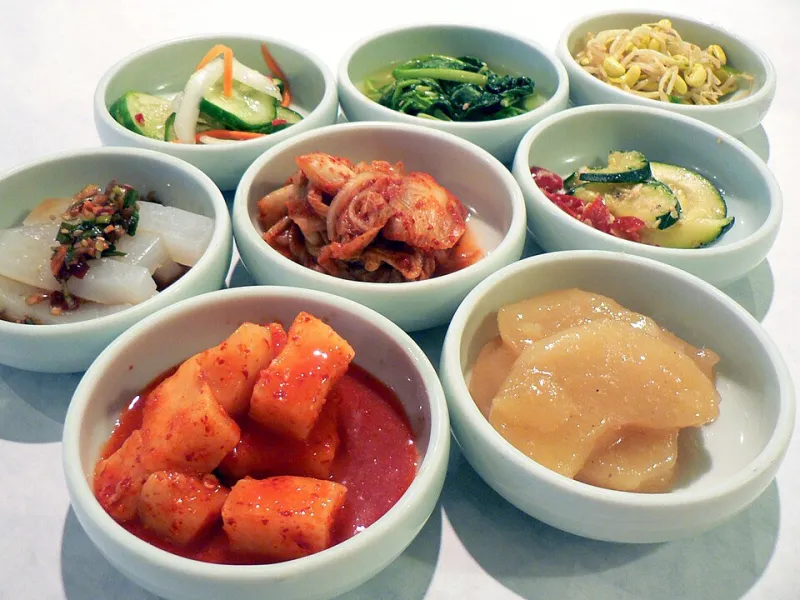
Photo: stuart spivack (a flickr user), CC BY-SA 2.0, via Wikimedia Commons
Your first proper Seoul meal can feel like a table-setting magic trick. You order one thing—a stew, a bowl of noodles, a plate of grilled pork—and suddenly six, eight, or twelve little dishes appear around it. Some are red and bubbling. Some are glossy with sesame oil. One is definitely kimchi. Another might be tiny dried fish. Nobody explains the system, because to everyone else it isn’t a system. It’s just lunch.
That’s banchan: the small side dishes served alongside the main event. In 2026, Seoul’s banchan culture is still one of the easiest ways to eat well without ordering a feast—but it helps to know what’s actually free, what’s refillable, and when reaching for another plate is totally normal versus mildly tacky.
What Banchan Actually Is
Banchan (say it closer to “ban-chan”) refers to the assorted side dishes that come with a Korean meal. They’re not appetizers in the American sense, meant to be finished before the entrée. They’re part of the meal, eaten alongside rice, soup, stew, noodles, or grilled meat. Think of them as condiments with benefits.
The spread changes by restaurant and season. A casual stew house might bring kimchi, radish kimchi, seasoned spinach, bean sprouts, and a little dish of salted squid. A barbecue spot leans into lettuce leaves, perilla leaves, sliced garlic, ssamjang, and a simple salad. A noodle shop may keep it to three quick plates: kimchi, pickled radish, and chopped green onion.
The important part: banchan is generally included in the price of your main dish. You’re not being upsold when the plates arrive. But “included” does not mean “unlimited everything forever.” That’s where the refill rules get fuzzy.
The Refill Map: What’s Usually Free, What’s Not
At most everyday restaurants, simple vegetable banchan are refillable at no charge. Kimchi, pickled radish, seasoned sprouts, spinach namul, lettuce wraps, and basic sauces are the usual suspects. If you finish the kimchi and want more, asking is normal. In many places, the staff will notice before you do and bring a fresh plate.
Some restaurants use a self-service banchan bar. You’ll see a small station with stacks of clean plates and a few refillable dishes. The etiquette there is simple: take what you’ll eat, use a clean plate, and don’t turn it into a personal salad bar. Piling up a tower of kimchi “for later” is the kind of move that gets a polite stare.
Other items are not automatically free to refill. Meat banchan, seafood, special house dishes, and anything that looks like a mini entrée may be portioned once. At barbecue restaurants, lettuce and salad are often refilled freely, but a premium aged kimchi or a seafood pancake is not banchan—it’s a menu item. If you’re unsure, ask before assuming.
The safest rule: refills of humble vegetables are usually fine; refills of anything that had a life swimming or walking are worth a quick question.
How to Ask Without the Awkward Hand Wave
You don’t need perfect Korean, but a few phrases smooth things over. “Banchan deo juseyo” means “Please give me more side dishes.” Point to the empty plate and say it with a smile. For a specific dish, “igeo ri-pil dwae-yo?” means “Is this refillable?” The word “ri-pil” comes from English “refill,” so it’s one of the easier loanwords to deploy.
A small bow of the head, eye contact, and “gamsahamnida” go a long way. What doesn’t work as well: snapping fingers, waving a chopstick overhead, or grabbing a passing tray. Seoul servers are used to busy rooms, but they’re not mind readers. A calm “jeogiyo” (“excuse me”) is the local equivalent of raising your hand.
If the answer is no, don’t push. Some places charge for extra rice, extra soup, or premium banchan, and that’s normal. The menu or the server will usually tell you. If you’re at a spot with a per-person banchan bar, the charge is often posted near the station or included in a set menu price.
Reading the Room: Three Restaurant Scenes
At a Korean BBQ table, banchan is practically a sport. Lettuce, perilla leaves, garlic, and ssamjang tend to flow freely because they’re part of wrapping the meat. Ask for more lettuce and you’ll usually get it. Ask for more of the marinated crab that came as a “service” dish, and you may get a polite explanation—or a bill.
At a stew or jjigae restaurant, the banchan is built for rice. Kimchi and radish are commonly refilled; extra rice is usually charged. This is also where you’ll see the “don’t waste it” principle in action. Taking three plates of kimchi and leaving two untouched isn’t a crime, but it’s not great form either.
At a noodle shop or gukbap house, the spread is smaller and more functional. You might get kimchi, pickled radish, and a dish of chopped chives. Refills are usually easy, but the staff may be moving fast. A quick ask when they drop off your bowl works better than flagging someone down mid-rush.
The Money Traps—and the Non-Traps
Banchan is not a secret cover charge. At the vast majority of everyday restaurants, the little plates are part of the meal. You are not expected to tip for a kimchi refill, and you don’t need to order extra banchan just to be polite.
The real charges show up around the edges: extra rice, extra soup, premium side dishes, and sometimes a banchan bar fee. If a server says “this one is charged,” believe them. Also, don’t ask for a doggy bag for banchan. Korean restaurants are often happy to pack leftovers from your main dish, but the side dishes are not a takeout item. And if you’re at a self-service bar, don’t bring your own container. That’s a different kind of traveler behavior entirely.
Building a Better Meal Around the Small Plates
The beginner mistake is treating banchan like a starter course and filling up before the main arrives. Instead, use the plates to pace the meal. Nibble kimchi with rice. Use lettuce to wrap grilled meat. Dip a bland vegetable into ssamjang. Let the banchan do the seasoning work so you’re not drowning everything in sauce.
If you’re eating alone, banchan is your quiet companion. You can order one main and still get a table full of variety, which is one of the great underrated pleasures of eating in Seoul. If you’re with a group, share the plates, but don’t double-dip with a used spoon. Use the serving utensils or take a portion onto your own plate first.
And if you’re unsure whether to ask for more, watch the room. Locals refill what they’re eating, not what they’re hoarding. They ask once, politely. They say thanks. That’s the whole system. The little plates aren’t a test—they’re an invitation to eat a little more slowly, try a little more widely, and enjoy the fact that in Seoul, lunch comes with a built-in sampler.