No Lightsticks Required: Your First Night in Seoul's Indie Rock Basements

Photo by Photo by foto DIAL on Unsplash on Unsplash
There's a version of a Seoul music night that involves a 20,000-seat arena, a synchronized lightstick wave, and a merch line that eats two hours of your life. Great. Lovely. But there's another version: a staircase off a Hongdae side street, a hand-painted sign, 150 people packed shoulder to shoulder, and a band you've never heard of playing like the room owes them money.
That second version is Seoul's indie and live-band underground, and it is shockingly welcoming to foreigners who show up with the right expectations. No fan club membership, no Korean phone number, no audition. You buy a ticket, you buy a beer, you stand there. That's the entire barrier to entry.
Here's how to do it without feeling like you're crashing someone's private party.
Why Trade the Arena for a 200-Cap Basement
Indie shows in Seoul cost roughly 15,000 to 35,000 won at the door — call it $11 to $26. Doors are usually 7 p.m., bands go on around 8, and you're back on the subway before the last train if you play it right. Compare that to a stadium ticket, a two-hour wait, and a 45-minute walk to find a taxi.
The scene itself splits into a few loose camps: polished indie pop, scuzzy garage rock, shoegaze that will rattle your fillings, and jazz-adjacent bands playing to people who actually sit down and listen. Most nights are three or four acts, 40 minutes each, with a 15-minute changeover where everyone floods the bar.
What you won't get is a dance challenge, a fanchant tutorial, or anyone filming the whole thing on a tripod. Phones stay mostly in pockets. That's the appeal.
Where the Rooms Actually Are
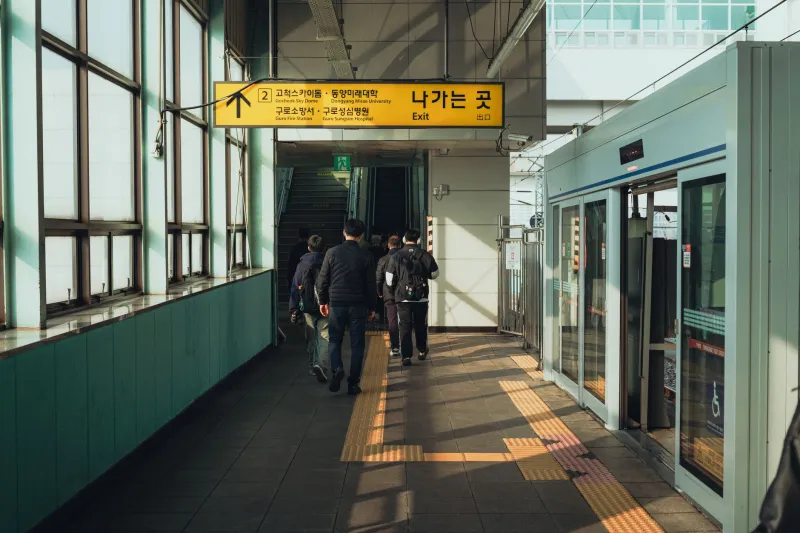
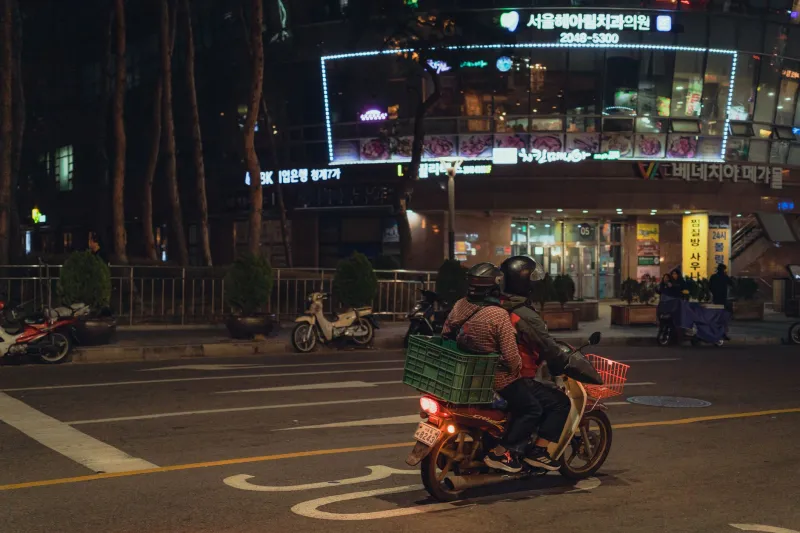
Hongdae is the default. The blocks between Hongik University Station and the Gyeongui Line Forest Park are dense with basement clubs — some hold 80 people, some hold 400. The area around Sangsang Madang and the smaller alleys north of Hongik University Station Exit 9 is where you'll find most of them.
Mullae is the interesting one. This former steelworks district south of Yeongdeungpo has turned old machine shops into galleries, cafés, and small performance spaces. The vibe is rougher, the crowds are smaller, and half the audience seems to know the band personally. If you want the version of the scene that locals are actually protective of, go here.
Itaewon and the edges of Hapjeong fill in the gaps, plus a handful of venues in Euljiro that double as bars.
Most of these places do not have a functioning English website. They have an Instagram account that gets updated every week or two. Follow five or six venues, turn on post notifications, and you'll have a show to go to within days.
How to Read a Korean Show Listing Without Speaking Korean
A typical poster or caption is a wall of Hangul, but the structure is predictable. Learn eight words and you can decode almost any listing:
- 날짜 / 시간 — date and time
- 오픈 7시 / 시작 8시 — doors 7, show starts 8. Koreans take the start time seriously; do not roll in at 8:15 expecting the opener to still be tuning.
- 라인업 — lineup, usually listed in playing order
- 입장료 — cover charge, often split into pre-sale and door price
- 예매 — advance purchase
- 현매 — tickets sold at the door on the night
- 매진 — sold out
- 만 19세 이상 — 19 and over. Bring your passport if you look young.
A line like 예매 25,000 / 현매 30,000 means 25,000 won in advance, 30,000 at the door. If a listing only shows a door price, just show up — most small rooms don't bother with advance sales at all.
Tickets: Do You Need a Korean ID?
The honest answer: almost never. Bigger venues selling through Korean ticketing platforms can be a headache for foreigners, since those sites often want a domestic phone number or card. But the rooms this guide is about mostly run on cash, a card reader, and a person with a clipboard at the top of the stairs.
If a show does sell advance tickets and you can't get through the checkout, message the venue on Instagram. A short, polite English DM asking about door availability gets answered more often than you'd expect.
One practical note: some venues are cash-preferred. Pull 50,000 won from an ATM before you go. Nothing kills a good night like discovering the bar only takes cash and the nearest convenience store ATM is out of service.
Inside: The Cass-and-Snacks System
Once you're through the door, the etiquette is simple and quietly enforced.
Buy something. A Cass or a draft beer runs 5,000 to 7,000 won. A bottle of soju is similar. Snacks — dried squid, chips, popcorn — are 3,000 to 6,000. The bar is how the venue survives, and buying a round is the unspoken cover charge for the second half of the night.
Don't bring outside food or drink. Convenience store beers on the sidewalk before you go in? Totally normal, everyone does it. Walking in with a half-finished can? Not normal.
Tipping doesn't exist. Don't leave coins on the bar. Do return your glass.
Talk between sets, not during them. The room is small, the PA is modest, and the crowd is there to listen. Save the conversation for the changeover.
No filming the full set. A quick photo or a 15-second clip is fine. Holding your phone up for 40 minutes will earn you a look.
Stand where you like. There's rarely a bad sightline in an 80-cap room, and no one is guarding a front row. Solo attendees drift to the middle-left and nobody thinks twice.
A Realistic One-Night Plan
- 6:30 p.m. — Eat first. A bowl of ramyeon or a convenience store kimbap near the station. Do not attempt a three-band night on an empty stomach.
- 7:15 p.m. — Arrive at the venue. Pay the cover, get a wristband or a hand stamp, buy a drink.
- 8:00 p.m. — First band. Usually the youngest or most experimental act on the bill.
- 9:00 p.m. — Second band, bar refill, maybe a bag of chips.
- 10:00 p.m. — Headliner. The room fills up right before this set, which is why arriving early earns you goodwill and a decent spot.
- 11:00 p.m. — Show ends. Walk to the station, or split a taxi with the people you just met. Seoul's subway winds down around midnight, so check your last train.
Total spend for the night, cover and drinks included: roughly 40,000 to 60,000 won — under $45.
If You're Flying Solo
Go anyway. Seoul's indie crowds are small enough that standing alone doesn't read as weird — half the room is there by themselves. Between sets is when people talk, and a simple "오늘 라인업 좋네요" ("tonight's lineup is good") will get you a nod, a smile, and probably a beer recommendation.
If you'd rather not start the conversation, post up near the bar. It's the natural gathering point during changeovers and where the staff will happily tell you which band to watch for.
A few other solo-friendly notes: keep your bag in front of you, don't leave your drink unattended, and save the venue's Korean address in KakaoMap before you leave your hotel — pin drops are more reliable than English venue names.
The Small Stuff That Saves You
- Earplugs. Small rooms, loud amps, zero acoustic treatment. Bring foam ones.
- Comfortable shoes. You'll be standing on concrete for three hours.
- A portable charger. KakaoMap plus Instagram drains a phone fast.
- Your passport. For the 19-and-over checks and for ID at the bar.
- A backup plan. If a show is sold out, the next venue is usually a five-minute walk away. That's the beauty of a Hongdae night — you can venue-hop until something clicks.
That's the whole thing. No fan club, no lightstick, no choreography to memorize. Just a door at the bottom of a staircase, a band that's genuinely good, and a cold Cass in your hand.