Line 2, Six Scenes: A DIY K-Drama Location Crawl Through Seoul
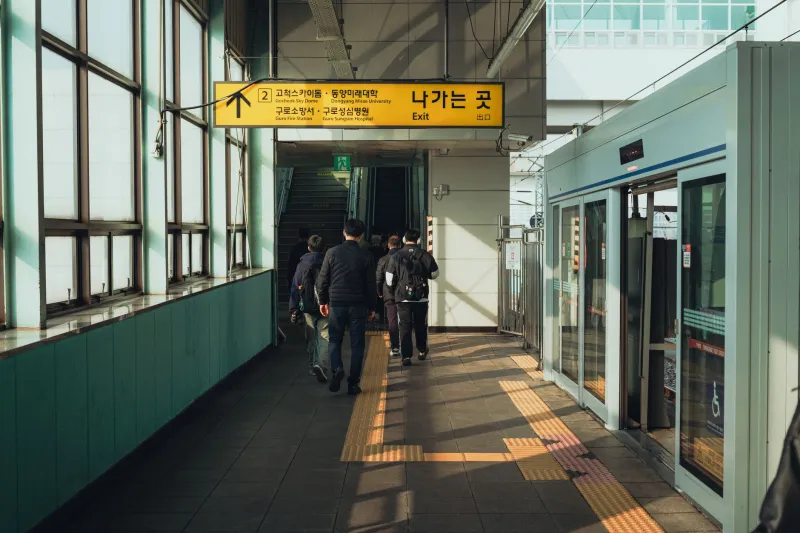
Seoul's subway Line 2 is a loop, which makes it feel like a cheat code for fandom travel. You can start at a university gate in Sinchon, ride east, and end up at the Han River without ever hailing a cab. In 2026, the line still connects some of the city's most familiar K-drama backdrops—campus courtyards, palace walls, rooftop alleys, and that riverside park where every second lead seems to have a moment. The best part: this DIY route costs little more than a T-Money card and a few café stops.
This is not a guided tour. There is no flag, no headset, no forty-person group blocking the shot. It is a half-day crawl you can bend around your own pace. Pack comfortable shoes, charge your phone, and load Papago for signs. Start early, because the difference between a clean photo and a frame full of strangers is usually one hour.
Stop 1: Sinchon Station, Exit 3 — Yonsei University
Take Line 2 to Sinchon and leave by Exit 3. The street toward Yonsei University is a slow uphill shuffle past cheap lunch spots and phone shops. Keep walking or hop the campus shuttle if it is running; the main campus is the draw. Yonsei's stone buildings and tree-lined paths have appeared in countless campus scenes, and even if you cannot name the exact drama, the vibe is unmistakable: blazers, coffee cups, and someone conveniently running into their crush.
Crowd timing: arrive by 8:30 a.m. on a weekday. Students are moving, but tour groups are not. Weekends after 11 a.m. are a different story. Photo tip: shoot the long walkways with the camera low and let the trees frame the top. Avoid standing in the middle of a path during class changes.
Café stop: grab a takeaway Americano near the station before you climb. You will want the caffeine for the next five stops.
Stop 2: Ewha Womans University Station, Exit 2 — Ewha Campus and ECC
Ride one stop to Ewha Womans University and take Exit 2. The campus is famous for the sunken ECC complex, a glass-and-concrete valley that looks like a drama set designed by an architect who loves cliffhangers. The sloping walkway and the big glass wall are the money shots. Ewha has been a backdrop for student-life stories and coming-of-age scenes, and the ECC plaza is the part everyone photographs.
Crowd timing: 10 a.m. is safe on weekdays. The plaza gets busy around lunch and again after 4 p.m. Photo tip: use the slope to create depth. Stand at the bottom and shoot upward, or use the glass as a reflection. If a student group is filming a TikTok, wait your turn; this is their campus first.
Café stop: the streets around Ewha are packed with dessert cafés. Pick one with a window seat, split a slice of cake, and people-watch for fifteen minutes. You are on vacation, not in a race.
Stop 3: City Hall Station, Exit 2 — Deoksugung Stone Wall
From Ewha, stay on Line 2 toward City Hall. Exit 2 puts you at Deoksugung, and the stone wall path along the palace is one of Seoul's most reliable K-drama locations. You know the shot: a long wall, dappled light, a coat, a confession. The wall has appeared in fantasy romances and historical-adjacent dramas, and it works even when the trees are bare.
Crowd timing: go before noon. The wall is a popular stroll, and lunchtime brings office workers and couples. Photo tip: walk halfway down the path and shoot back toward the palace gate for a cleaner line. Do not climb the wall. Do not block the sidewalk for a fifteen-minute pose-off. Seoul has places to be.
Café stop: head toward Jeong-dong for a quiet coffee. The side streets behind City Hall are calmer than the main palace entrance.
Stop 4: Euljiro 3-ga Station, Exit 4 — Sewoon Sangga and the Rooftop Alleys
Two stops east, Euljiro 3-ga is the gritty counterpoint to the palace. Exit 4 leads toward Sewoon Sangga, the long mixed-use block with rooftop views and old-school workshops. The area has popped up in dramas that want Seoul to look lived-in rather than polished: rooftop conversations, alley walks, neon at dusk. You do not need a specific scene to enjoy it, but if you are here for the fangirl checklist, the rooftop deck is the recognizable bit.
Crowd timing: early afternoon is fine. Sunset is prettier but busier. Photo tip: shoot the rooftop grid and the old signage. Ask before photographing shopkeepers. This is a working neighborhood, not an outdoor museum.
Café stop: Euljiro has a growing cluster of tiny cafés tucked into printing shops. Look for a spot with a hand-painted sign and no line. That is usually the good one.
Stop 5: Wangsimni Station, Exit 6 — Seoul Forest Approach
Continue east to Wangsimni and take Exit 6. From here, walk or take a short bus ride toward Seoul Forest. The park is not technically on Line 2, but it is an easy add-on and a favorite for outdoor drama scenes: bicycles, picnics, leafy paths, and the kind of light that makes everyone look like they are in a coming-of-age drama. If you are short on time, skip the deep park walk and just do the edge nearest the station.
Crowd timing: weekdays before 3 p.m. are your best bet. Weekends are a stroller parade. Photo tip: shoot into the trees, not into the sun. Use the paths as leading lines. If you want the empty bench shot, walk ten minutes past the main lawn.
Café stop: grab a bottled drink from a convenience store and sit on a bench. Budget tip: this is the cheapest and most scenic break of the day.
Stop 6: Ttukseom Station, Exit 8 — Ttukseom Hangang Park
Finish on Line 2 at Ttukseom and take Exit 8. Follow the signs and walk roughly twelve minutes to the river. Ttukseom Hangang Park is the closing scene of this route: wide water, evening sky, and the kind of breeze that makes a paper cup of chimaek feel cinematic. The park has shown up in dramas whenever a character needs to stare at the river and rethink their life. You will understand why.
Crowd timing: arrive about an hour before sunset. That gives you time to find a spot, take photos, and watch the sky change. Weeknights are calmer than Fridays. Photo tip: shoot the bridge and the water from the lower path, then turn around for the skyline. Use portrait mode for the classic riverside silhouette.
The Practical Stuff
Budget: one T-Money card covers the whole Line 2 route, plus a short bus or a walk to Seoul Forest. Add two café stops and a convenience-store drink, and you are still under what a bus tour would charge. In 2026, a single subway ride is cheap; the real cost is the cake you will inevitably buy.
Timing: start at 8:30 a.m. and plan to finish at Ttukseom by late afternoon. If you are running late, cut Stop 5. The route still works.
Etiquette: do not film inside shops without permission, do not block sidewalks, and do not treat campuses like free sets. A quick gwaenchanayo—or just a gesture toward your camera—goes a long way.
Photo gear: a phone is fine. Bring a small power bank. The route is more about framing than fancy lenses.
The joy of this crawl is that it is yours. You can linger at the Deoksugung wall, skip the rooftop, or decide that the river is the only scene you need. Line 2 will keep looping. Your T-Money card will keep working. And somewhere between Sinchon and Ttukseom, you will get your drama moment without a tour bus in the frame.