Two Cuts, One Grill, Zero Panic: Ordering Korean BBQ in Seoul Without the Guesswork
The door slides open, a wall of smoke and K-pop hits you in the face, and a laminated menu with forty items lands on the table. Somewhere behind you, a group of office workers is laughing. Everyone is waiting to see what you order.
Take a breath. Korean BBQ is one of the most forgiving meals in Seoul once you understand three things: servings, refills, and the two-dip rule. Everything else is just meat and scissors.
The only number that matters: servings, not plates
A single serving — 'il inbun' — is roughly 150 to 200 grams of meat. That is about a third of a pound. Two hungry adults usually land in a good place with two to three servings total, not two to three per person. The classic mistake tourists make is ordering five servings because the prices look low per line item and then staring at a table of raw pork for an hour.
A safe formula for two people: one cut of pork per person, plus one extra cut to share. If you are still hungry afterward, order another serving. Staff bring it in two minutes and nobody judges you. Over-ordering is the only real way to blow your budget here.
The starter order that never fails
For a first dinner, keep it boring and delicious: two servings of samgyeopsal (pork belly) and one of moksal (pork shoulder), a bowl of rice each, and a doenjang jjigae to share. If you want beef, order chadolbagi — paper-thin brisket that cooks in about twenty seconds — or deungsim if you are feeling fancy.
Pork runs about 13,000 to 18,000 won per serving. Beef is where budgets go to die: 25,000 to 45,000 won per serving is normal in Seoul. Two people eating pork, splitting a stew, and sharing one bottle of soju should land around 30,000 to 40,000 won each, tip not required — and in Korea, not expected.
Banchan: what refills free and what quietly costs money
At most pork-focused BBQ spots, the side dishes are bottomless. Kimchi, kongnamul (seasoned bean sprouts), spinach namul, pickled radish, raw garlic, and the lettuce-and-perilla-leaf wrap stack all typically come back for free. Just catch an eye and say 'deohae juseyo' — please add more.
What is usually not free: rice, cold noodles, steamed egg at some chains, cheese fondue, and extra lettuce at a handful of busier franchises. Naengmyeon at the end of the meal is a beloved ritual and it is always a paid add-on. None of this is a scam; it is just how the menu reads once you know it.
Ssamjang versus salt: the two-dip rule
This is the piece that upgrades your whole dinner. Beef gets salt. Pork gets ssamjang.
For beef, dip the cooked slice in a little sesame oil with salt and a few grinds of black pepper. That is it. Good beef does not need more, and this is how most Korean tables eat it.
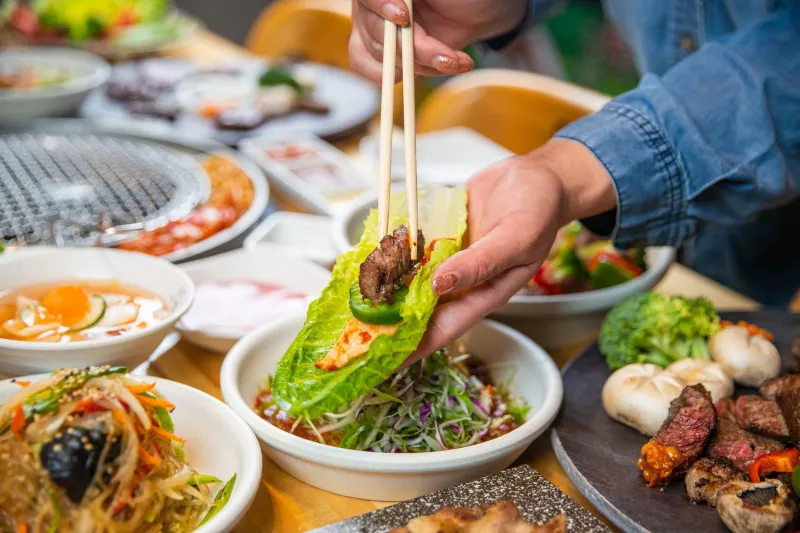
For pork, use ssamjang, the thick fermented bean-and-chili paste. Build your wrap in this order: lettuce, a perilla leaf if you like the minty hit, one piece of pork, a small dab of ssamjang, a slice of raw garlic, maybe a piece of kimchi. Fold it so it fits in one bite. Do not double-wrap. Do not put five pieces of meat in there. The wrap should be a bite, not a burrito.
Grill duty without a crisis
At decent restaurants, staff will hover and do most of the work. Let them. When you do take over: flip once, do not poke, and use the scissors to cut cooked meat into bite-size pieces. Move finished pieces to the cooler outer ring so they do not turn into charcoal while you eat. Never put raw meat on top of cooked meat.
Need something? Say 'yeogiyo' across the room, or press the little call button if your table has one. Both are completely normal.
Soju math for people with plans tomorrow
One green bottle between two adults is a normal dinner amount. A 360ml bottle at around 17 percent is roughly the alcohol of four or five shots, so treat it accordingly. If you mix somaek, the beer-and-soju combo, most people go about three parts beer to one part soju — the reverse ratio is how a pleasant evening becomes a lost evening.
Drink water between pours. Eat constantly. Skip the bomb-shot ritual if you have a morning train. Also note that Korea's legal drinking age is nineteen, and staff may ask for ID even if you are clearly well past it.
Red flags that say tourist trap
The menu is your best detective tool. Be wary of a photo menu plastered in six languages with no Korean diners in sight, prices listed only per 100 grams, a mandatory two-serving minimum per person, a 10 percent service charge, or a host standing outside waving you in near the busiest subway exit.
Walk one block past the neon. The better room is usually the one with short menus, plastic stools, smoke-stained walls, and a line of people in work clothes.
Your order script
- 'Du myeong-iyo' — table for two
- 'Samgyeopsal i inbun juseyo' — two servings of pork belly, please
- 'Moksal han inbun juseyo' — one serving of pork shoulder
- 'Gongibap du gae juseyo' — two bowls of rice
- 'Deohae juseyo' — more please (banchan refills)
- 'Yeogiyo' — excuse me
- 'Gyesan-iyo' — the check
The exit
Hang your jacket on the chair or stash it in the plastic bag most places hand out, because you will smell like a grill for the rest of the night. Pay at the counter on the way out. No tip. Then walk a few blocks, find a convenience store, and grab something cold and fizzy for the ride home.
You just did Korean BBQ correctly. Order two cuts next time, add one more if you are still hungry, and keep the ssamjang close.