Busan Without the Checklist: A Fish-Soup Morning, Nampo Film Alleys, and One Very Quiet Staircase
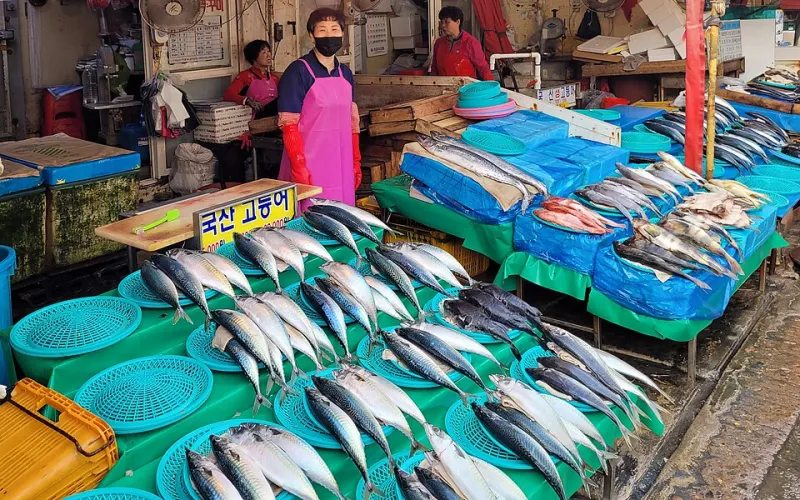
Photo: Bernard Gagnon, CC0, via Wikimedia Commons
Seoul is the easy default. Busan is the better plot twist. The KTX from Seoul Station drops you into a port city that feels saltier, steeper, and a little less polished than the capital, and that is exactly why it works for a day trip. If you only have one day, do not try to see all of Busan. Pick a neighborhood and let it unfold. This route runs from Jagalchi Market to Nampo-dong to Choryang, with one short taxi or subway hop at the end. No car needed, no packed schedule required.
First Stop: Jagalchi Market, Before the Crowds
Jagalchi Market is often described as Korea's largest seafood market, but the phrase undersells how ordinary it feels. It is a working market, not a museum. Women in rubber gloves are sorting the morning catch, guys are hosing down tiles, and the smell of brine hits you before you see a single tank. Arrive between 7:30 and 8:30 a.m. The fish is moving, the restaurants are waking up, and you are not yet competing with tour groups.
The ground floor is tanks and stalls. The upper floors and surrounding alleys have places to sit and eat. You do not need Korean, but you do need a little patience and a charged phone. Download Papago and KakaoMap before you leave the hotel. Google Maps is unreliable in Korea. Bring cash. Some stalls take cards, but cash keeps things simple. Point at what you want, hold up fingers for quantity, and ask igeo eolmayeyo? (how much is this?). Smile, say kamsahamnida, and do not touch the seafood unless invited.
First-timer order: If you want the classic breakfast, look for saengseon-guk, a clear fish soup, or maeuntang, the red, spicy fish stew. A grilled fish set (saengseon gui jeongsik) is the safest bet if you want rice, banchan, and something you can eat without negotiating too many bones. Mulhoe, the cold raw-fish soup, is excellent but maybe not at 8 a.m. on your first visit. If spice is a concern, say an maege juseyo (not spicy, please) and accept that it may still have a little kick.
Where to sit: Many stalls have a few tables, and the second-floor restaurants are used to visitors. If a vendor waves you upstairs, follow the gesture. If the menu is only on the wall, use Papago's camera. If there is no menu at all, point at a neighboring table's bowl and ask for the same. That is not rude. It is how market meals work.
Budget: A hearty breakfast here can run 10,000 to 20,000 won per person, depending on what you order. Think of it as a Seattle fish market breakfast with more side dishes and fewer paper cups.
Nampo-dong: Film Spots Without the Scavenger Hunt
From Jagalchi, walk ten minutes into Nampo-dong. This is the Busan that shows up in dramas: narrow shopping streets, snack stalls, and buildings that look ordinary until the camera frames them. The film anchor here is BIFF Square, the home of the Busan International Film Festival. It is not a theme park. It is a street with handprints, plaques, and a lot of people buying socks and fish cakes. Walk it once, look down at the handprints, and then let the side alleys do the work.
Your film-location plan should be three pins, not thirty. Start at BIFF Square. Drift toward Gukje Market and the smaller alleys around Nampo Station. If you want a historical staircase in the middle of the walk, add the 40 Steps, a landmark tied to the Korean War and a frequent backdrop in Busan-set stories. Do not try to find every location from every drama. The city is the set.
Street food is the intermission. Grab hotteok, fish cake, or a cup of iced coffee. Nampo is busy, but it is busy in a useful way: you can people-watch, duck into a shop, and reset without feeling like you are missing the main event.
The Quiet Staircase at the End
The last stop is the part that makes the day feel like a drama rather than a tour. Head to Choryang-dong, the neighborhood above Busan Station, and find the 168 Stairs. It is a steep residential staircase with a small monorail beside it, and it has the kind of angled, lived-in look that location scouts love. You can take a short taxi from Nampo, or ride one subway stop to Busan Station and walk up. The walk is the point, but the taxi is allowed. This is a low-pressure day, not a fitness test.
Treat the staircase like a neighbor's front steps, because it is. Keep your voice down. Do not block doorways. Do not fly a drone. If someone is carrying groceries, step aside. The reward is not a plaque. It is the view back over the port and the feeling of being in a real neighborhood. Sit on a nearby bench if there is one, catch your breath, and let the afternoon end quietly.
How to Make the Route Work
Do not zigzag. Jagalchi, Nampo, and Choryang form a rough line from the water up toward the station. Start early. The market is better before 9 a.m., and the film streets are easier before lunch. Keep one flexible hour. If a stall looks good, stop. If a staircase is crowded, wait. If it rains, trade the walk for a longer café break and take the subway. Use T-money or a contactless card for transit, and keep a small cash buffer for market stalls. Have a backup dinner plan near Busan Station, but do not schedule it. The whole idea is to leave room for the day to surprise you.
Busan does not need to be a checklist. Sometimes one fish soup, one film alley, and one quiet staircase are enough.